Introducing A P2 To Award Travel
When I first learned about points and miles, I could not wait to share my big discovery with my husband. Until I was immediately met with the skepticism that those of us in this hobby regularly hear from newcomers. Questions like: “What if we ruin the credit scores we’ve worked so hard to build?” “What if we spend money on fees and have nothing to show for it?” These are understandable concerns. But I felt like I had just uncovered the proverbial gold mine for unlocking our travel goals. I was determined to win over my P2 and usher him into this world. But I know firsthand introducing a P2 to award travel can be no small feat! Does your P2 have similar questions? Here’s how I eventually brought my reluctant co-traveler around.

How I Got My P2 Hooked On Award Travel
Years ago, after returning from a special (and expensive) family getaway to Mexico, I found myself daydreaming about how to take more trips like that. I worked hard. My husband worked hard. Still, it took years of adding to that travel piggy bank to make our one-week vacation a reality. How could I take our modest budget household and do this more often? Down the rabbit hole I went. I soon found the answer: points and miles. These lucrative currencies were there all along, just waiting to change our lives in ways I never dreamed. I wanted to up our travel games and make experiences like that Mexico trip a reality. If you’ve seen me around the ToP Facebook Group, you know now that I have. But the first step was introducing my P2 to award travel.

Addressing Common Points + Miles Myths
To start with introducing a P2 to award travel, I think you first have to dispel some common misconceptions. Here are some of the discussions my husband and I had as we were starting to on-ramp into this hobby.
1. You have to spend a lot of money to make this worthwhile.
I’ll admit, I fell victim to this at first. I would see posts with huge point totals or requests for next-card advice with spends I would never dream of. Our household had a tight budget, and I knew where every dollar was going. But it turns out there are new card offers for just about every level of spend. Some of our favorite points-earning cards start at just $500 in 3 months, including the Chase Freedom Flex and Chase Freedom Unlimited. With just modest household expenses and shifting everything you can to a new card, there are hundreds of thousands of points to be earned with just about any budget.

2. Opening too many cards will ruin our credit.
No one wants to damage their diligently maintained score. There are so many misconceptions about credit scores and how they work. But having more available credit is a major driver in improving your score. When you only have one or two cards, it can translate to a fairly low available credit. When you use that credit, it shows up as higher utilization and drags on your score. The more cards P2 and I added, the higher our scores climbed. Making timely payments and avoiding large balances also helped to improve things over time. There is occasionally a dip when we apply for a new card, but it bounces back quickly after just a few months. After years in the hobby, our scores have gone up considerably as a direct result.

3. Credit cards mean debt.
Frequently when I tell others about this hobby, I’m asked about debt. Having credit cards and using them responsibly for this hobby means that you will not carry consumer debt. Rule #1 is to always pay your statement balance in full every month. Any balances incurring interest will quickly erode your travel benefits. The goal is to use credit cards instead of debit cards or cash. We aren’t spending more money. Rather, we’re shifting how that spending gets processed.

4. It’s too complicated.
Just like any interest worth pursuing, there are levels of mastery. A preschooler can paint, though they might not be an instant Picasso. That doesn’t mean their artwork isn’t worth a place on the fridge. Even at the most basic level, award travel can add tremendous value to your life. Take things slowly. Learn as you go. I might not have known how to book QSuites to the Maldives when I introduced this hobby to my P2—but booking a fun long weekend in California with free flights and hotels was enough for two beginners. The more time you spend learning, the more you can do with your points and miles.

5. It’s too much work.
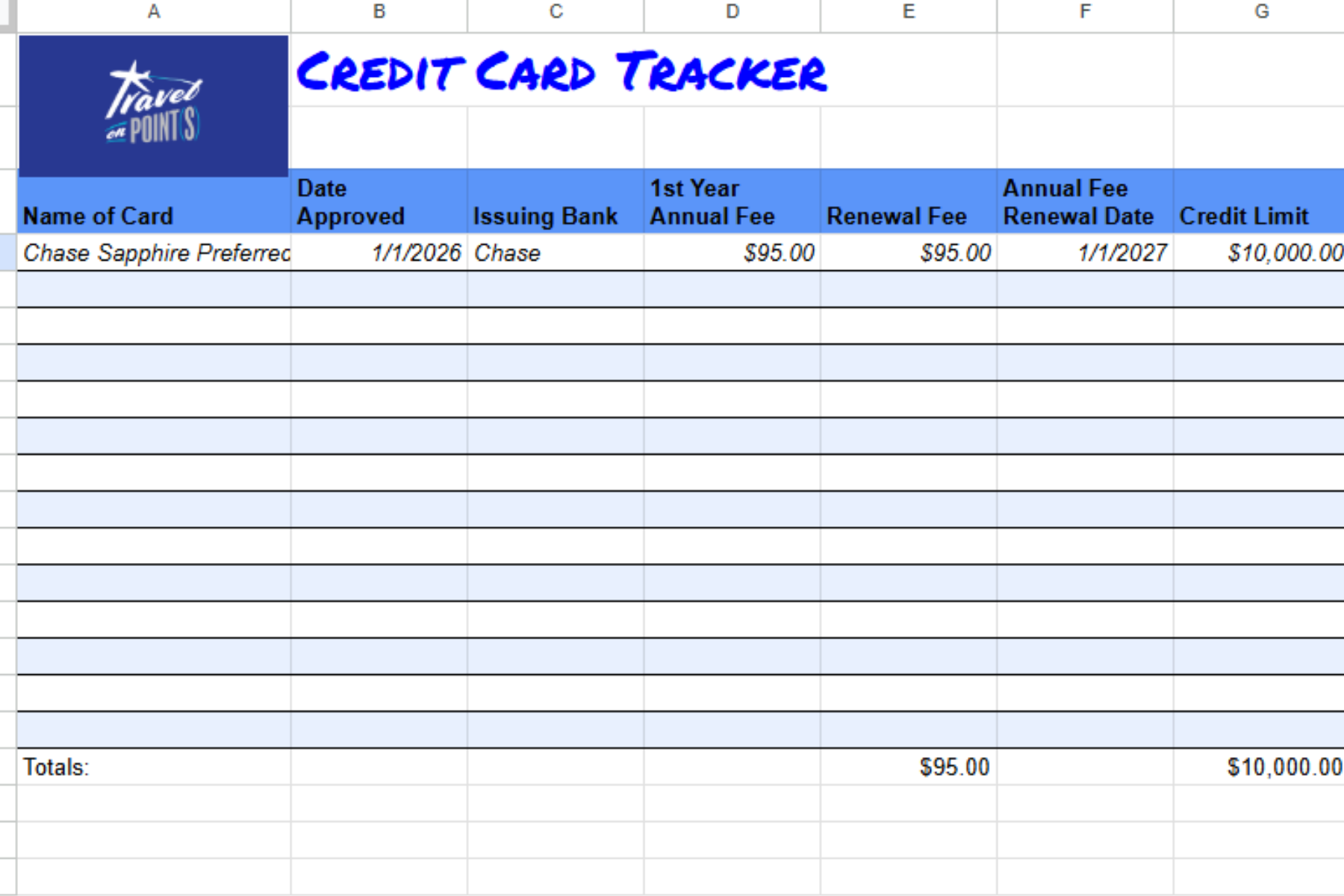
In our household, I’m the organizer. I keep a family calendar, schedule appointments and make sure laundry soap gets added to the shopping list. I knew that P2 wasn’t going to magically become interested in spreadsheets, even for free travel. This is where a two-player team can be so valuable. Once P2 agreed to the applications, I took on the responsibility of daily management of our accounts and points balances. The level of participation can and will vary across households.
6. I don’t want to always be worrying about which card to use.
This one is easy! The best card to use for any purchase is the one with a big welcome offer. It’s that simple. I told P2 that he will never need to worry about more than one card in his ultra-thin wallet. When we get a new card, I add it to his digital wallet so he can use his phone or watch for any daily purchases. He keeps a general backup card in his wallet. For us, that is our American Express Blue Business Plus so we can safely earn at least 2x on everything. Diving too far into using this card for gas, that one for groceries, etc., can overwhelm a timid P2. Less is more. Those few extra points we might miss out on because he didn’t use a card with a gas multiplier are a great price to pay for an otherwise happy participant.

7. I don’t want to pay annual fees.
Yes, there are some fees involved in this hobby. I suggested we use a portion of our earmarked travel budget to pay a few annual fees and see what it could get us. In the ToP Facebook Group, we always say a fee is well worth it in the first year. Trading a $100 annual fee for several thousand dollars in travel just makes sense, purely from a numbers standpoint. I reassured my husband that we don’t have to pay the fee again on the same card unless it continues to provide value. I’m ruthless about cutting cards and expenses in our lives that don’t earn their place.

8. We don’t have a big business to open business cards.
Businesses come in all shapes and sizes. This guide walks through some great examples of what qualifies as a business. It doesn’t have to have a brick-and-mortar location. You don’t have to have millions of dollars in sales. Some of the simple activities we were already doing in our daily lives qualified my household for business cards. Once I showed P2 that all we needed was business activity, it opened up a lot of options for us.

9. Cash back is better.
Cash is king, right? That’s what we’ve been told for as long as I can remember. Why worry about points and all the hassle that comes with them when I can just earn 2% cash back on everything and use it for whatever I want? This was P2’s argument for keeping his simple bank card. Are 2 points really more valuable than 2 cents? It’s all in the redemption. While some dynamic programs base their redemptions on a cash price, many offer outsized value when redeemed with points. For instance, I could cash out 100K points for a $1,000 statement credit with Chase. Nice! But … I could also use those same 100K points to book a business class ticket to anywhere in the world. Can you buy that for $1,000? Unlikely. How about 8-10 nights at a swanky hotel? The power of points can quickly and exponentially outperform cash.

10. This sounds like a scam.
Nearly free travel as a result of the money you already spend every day? Yes, this does sound too good to be true. That’s tough to wrap our heads around, and I’ve pinched myself more than once. After reading thousands of examples in the ToP Facebook Group, I knew it was possible. Banks are businesses. They want more customers, so they offer rewards to encourage people to try their products. This includes lucrative travel reward cards. You aren’t doing anything wrong by taking them up on their offer to see if that new card is a great fit for you and your lifestyle.

The final ToP-secret maneuver: Booking something with your points
Now for my best trick for introducing a P2 to award travel: Make that first redemption. Ours was simple—a long weekend in San Diego. Our Southwest flights cost $5.60 each for taxes, and our hotels were completely free. As we were enjoying a sunset on the beach, P2 looked at me with disbelief. “This was basically free, wasn’t it?” he asked. Yes, it really was. Shortly after that trip, we booked our first business-class flights across an ocean using points. The look of wonder on P2’s (and my own) face as we boarded that flight will be something I remember forever. Once you do that, there’s no going back for a P2.

Introducing A P2 To Award Travel: ToP Thoughts
A two-player household can really increase potential earnings in the long run. Between referrals, alternating cards to control velocity, and pooling points for redemptions, the upside of introducing a P2 to award travel can be powerful. Helping to ease a timid P2’s fears can go a long way toward making your family’s travel dreams a reality. Did you have a particular moment when your P2 jumped on board? What worked best for you? Let us know over in the ToP Facebook Group.