
Travel Insurance Medical Claim
Getting sick abroad is exactly the kind of situation that makes you glad you bought travel insurance—but having coverage and actually getting a claim paid are two different things. After getting sick during my trip to Japan, I had to file my first travel insurance medical claim for doctor visits, medications, specialist care, and related transportation expenses. This became the first step in a much bigger travel insurance saga. I had purchased a single-trip travel insurance policy for my trip and charged my travel expenses to my Chase Sapphire Reserve®, including the taxes and fees on my award flights, to be eligible for credit card travel insurance as well. Eventually, I would need to use both. First came the medical claim and surprisingly, this was by far the easiest part of the entire process.
Getting Sick in Japan
After getting sick in Japan, I found a doctor and went in for treatment. I received medication as well as a doctor's letter documenting my illness. Rather than getting better, however, I continued to get worse. I returned to the doctor, received additional medication and another letter, and was referred to a specialist. My next step was visiting that specialist for further evaluation and treatment. At this point, I knew there was a good chance I'd be filing a travel insurance claim. So I was extremely careful about documenting everything.
I Documented Everything
This turned out to be one of the most important things I did throughout the entire insurance process. I kept every receipt I received, saved and labeled the photos of everything as files so I could easily identify them later. I also kept notes documenting the dates and times when everything occurred. That meant that when it was finally time to file my medical claim, I wasn't trying to reconstruct several weeks of events from memory while searching through emails, photos, credit card statements, and random pieces of paper. I already had a record. If you're dealing with an illness or other insurance-covered event while traveling, I'd recommend starting this process immediately—even if you aren't sure whether you'll ultimately file a claim.

Filing My Travel Insurance Medical Claim
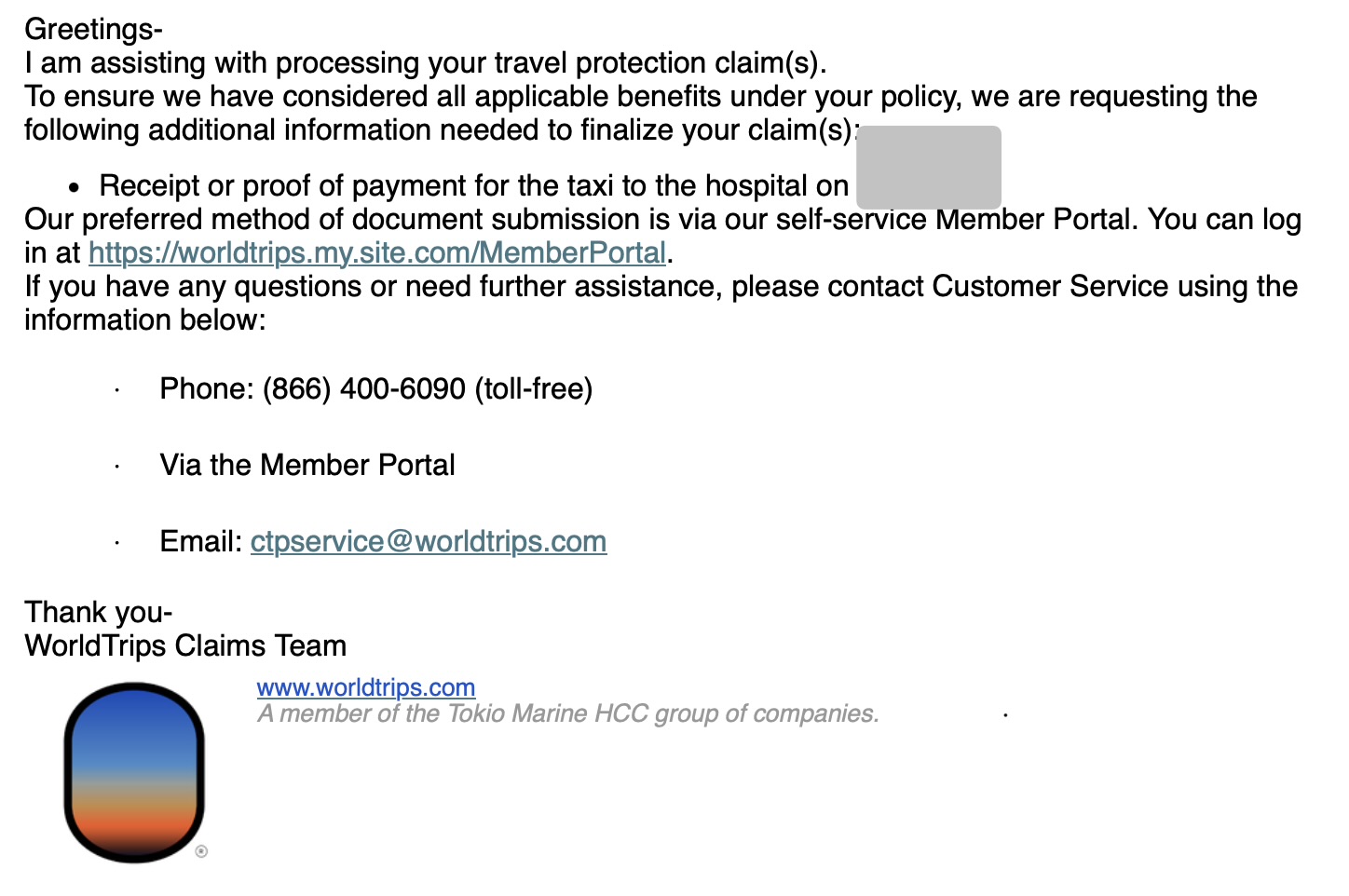
Once I was ready, I submitted my medical claim along with the documentation I had collected. That included the relevant medical documentation, doctor's letters and receipts. Then I waited for a response from the insurance company. Compared with what would happen with my trip interruption and cancellation claims later, this part of the process moved surprisingly quickly. But it still took longer than I would have liked. The insurance company reviewed my submission and about a month after I submitted the claim, they came back requesting some additional information. Among the additional documents they needed were receipts for the taxis I took in connection with my medical care. Fortunately, because I'd been keeping track of my expenses and documentation, I was able to provide the additional information. Then it went back to the insurance company for another review.
My Medical Claim Was Approved
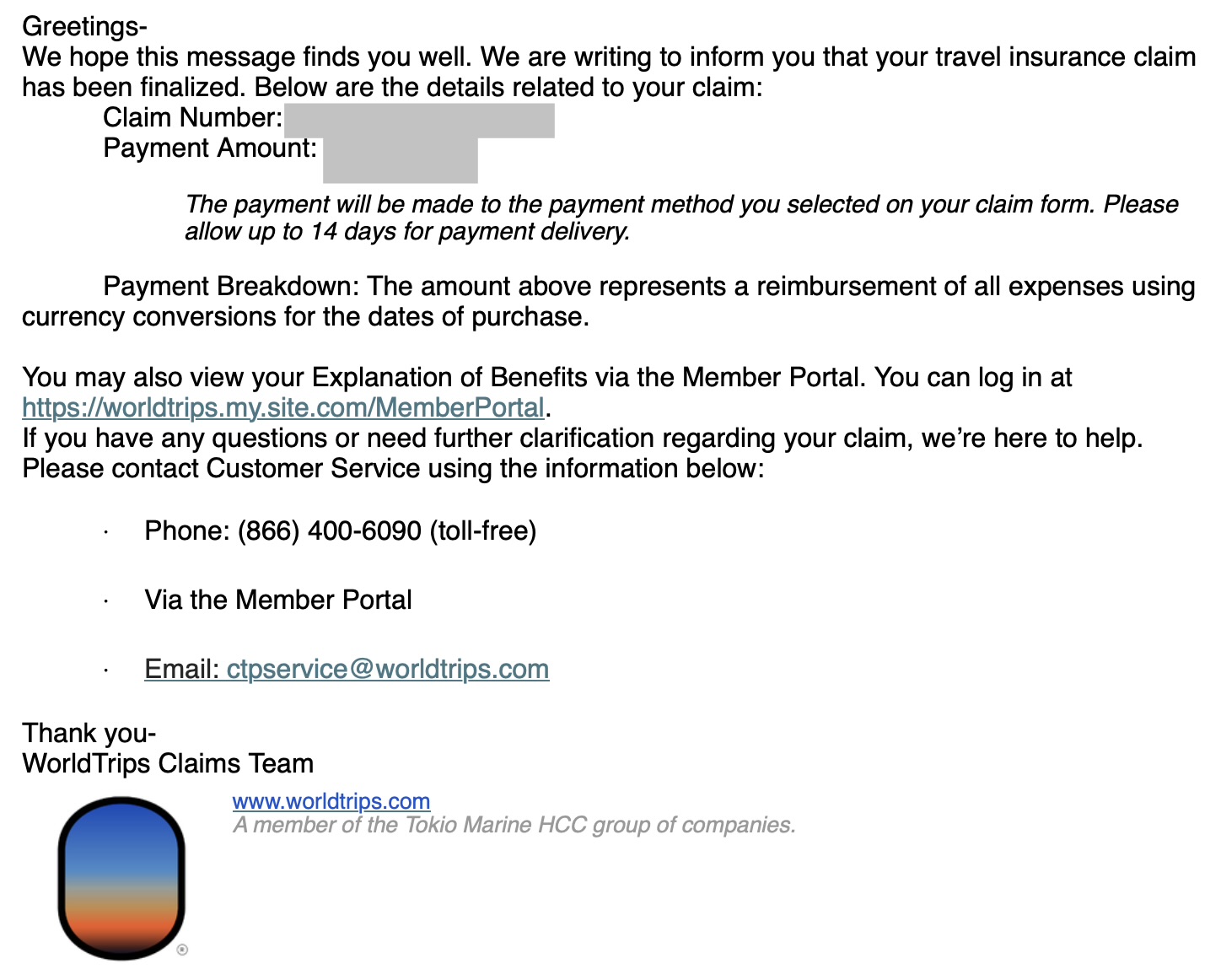
After I submitted the additional documentation, the insurance company approved and paid the claim. In all total, it took about 6 weeks from submitting the original claim to final approval. The process was relatively straightforward: I received medical treatment, documented what happened, kept my receipts, submitted the claim, responded to a request for additional information, and received reimbursement. Considering how intimidating filing a travel insurance claim can sound, my first experience was surprisingly painless, although I wish it had been a faster process. That would not be the case with the next portion of my claim.
The Medical Claim Was Only the Beginning
My illness ultimately affected much more than my medical expenses. I was sick for roughly 30 days, which meant my original travel plans had to change significantly. This impacted hotels, transportation, and other parts of my itinerary. Rather than immediately continuing my planned travels, I waited until I felt well enough to fly to my next destination. That created an entirely different category of expenses—and an entirely different insurance claim including both a trip cancellation and trip delay claim. And unlike my medical claim, resolving that portion is still ongoing.
ToP Thoughts: Travel Insurance Medical Claim Japan
The biggest lesson from my medical claim wasn't complicated: document everything from the beginning. Keep the doctor's letters, the medical receipts, and transportation receipts. Take photos of everything and label your files in a folder on your computer. Write down dates and times. Don't assume you'll remember exactly what happened several weeks later. I didn't know at the beginning that this would turn into a months-long insurance saga. But keeping organized records made the relatively simple medical claim easier—and became even more important when I moved on to the much more complicated trip interruption and cancellation claims.
While a single trip insurance policy made the most sense for my travel plans, an annual plan may be a great option for others. In this article, Derrick describes his most recent travel insurance claim experience with an annual plan. Have you gotten sick abroad and had to file a travel insurance claim? Let us know you experience over in the ToP Facebook Group.