Japan Trip Delay and Cancellation Claim
My medical travel insurance claim after getting sick in Japan was surprisingly straightforward. My trip delay and cancellation claims were anything but. After being sick for roughly 30 days, I eventually felt well enough to fly to my next destination. By then, my original itinerary had been significantly disrupted, and I had accumulated expenses I never expected to have when I'd originally planned the trip. Fortunately, I had purchased single-trip travel insurance. Unfortunately, getting reimbursed wasn't nearly as quick as it had been for my medical expenses. Here's part two of my Japan trip delay and cancellation claim saga. (Catch up on part 1 here.)
RELATED:If you're still deciding whether travel insurance is worthwhile, these ToP guides may help: Should I Buy Travel Insurance? and Travel Insurance Guide: Trip Delay and Cancellation Coverage.
Filing My Trip Delay and Cancellation Claims
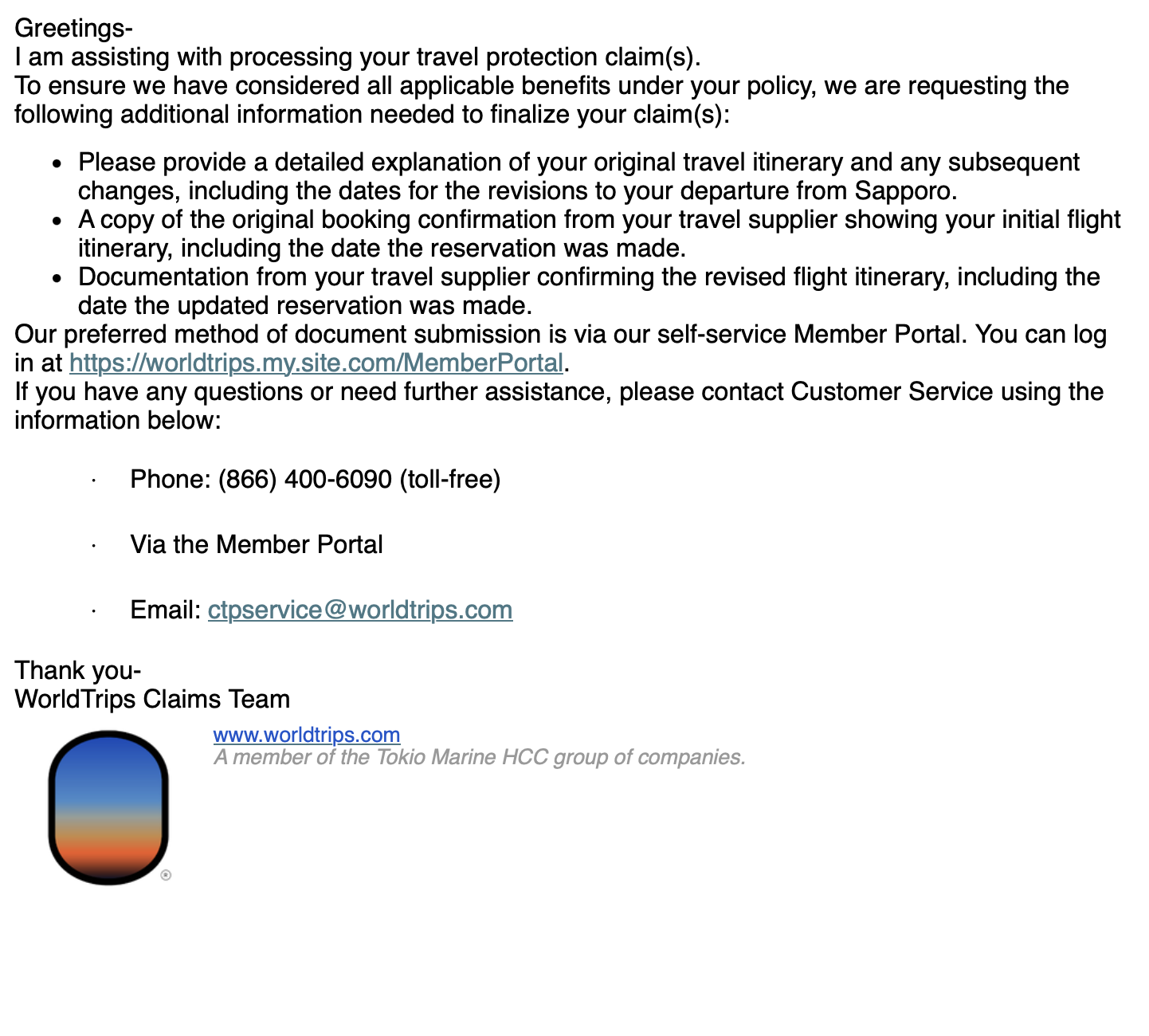
Once I was feeling better and had moved on to my next destination, I filed my Japan trip delay and cancellation claim for the parts of my trip affected by my illness. Then I waited. And waited. Unlike my medical claim, which had been processed relatively quickly, these next claims took months to process. Eventually, the insurance company responded and asked for additional information. I submitted it, and then I waited again.
After another period of processing, I received another request. This time, the insurance company wanted a summary of my itinerary and the cancellations resulting from my illness, along with receipts documenting everything. Fortunately, I had been keeping extensive records throughout the process. I had saved and labeled receipts and maintained notes about when things happened. That organization became especially important when I had to reconstruct what was supposed to happen versus what actually happened. When you're traveling for an extended period, that can become a substantial amount of documentation. This wasn't simply a matter of uploading one canceled hotel reservation. I had to demonstrate how an illness lasting roughly 30 days affected a much larger trip.
Finally, My Claim Was Approved
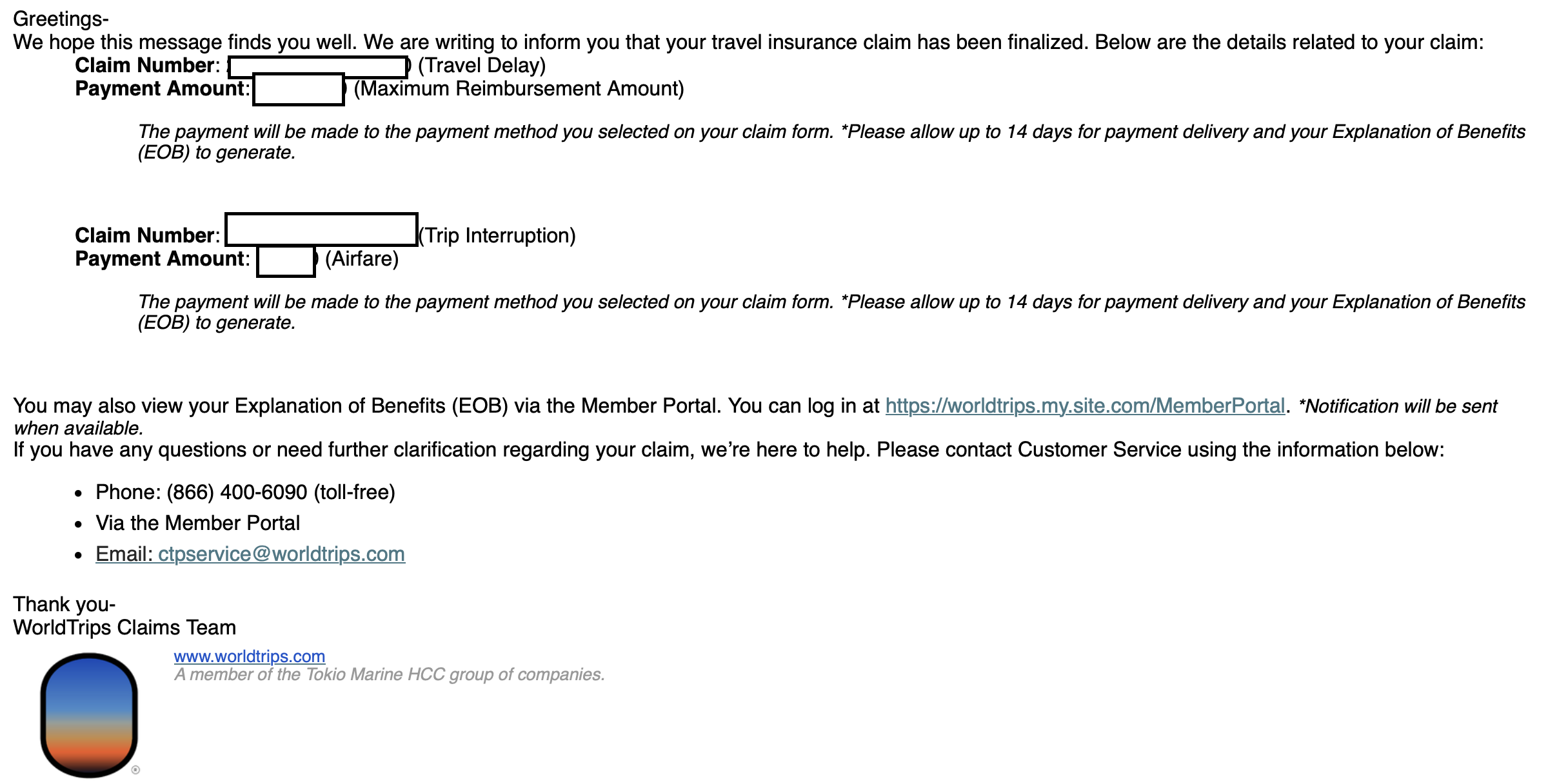
Approximately three months after I originally filed my Japan trip delay and cancellation claim, I received the news I'd been waiting for: my claim was approved. Payment would follow. That was obviously great news, but there was another complication. The insurance wasn't going to reimburse everything I'd spent. My coverage had a maximum benefit.
When I purchased my single-trip policy, I insured the trip based on the expenses I reasonably expected to have. What I hadn't expected was having to pay cash for roughly 30 days of hotels because an illness completely disrupted my plans. Unfortunately, that distinction mattered. The cash cost I had insured was significantly lower than the expenses I ultimately incurred as a result of the interruption. My travel insurance company approved the maximum amount available under my coverage: 150% of the insured trip cost. But 150% of my insured trip cost was still less than what I'd actually spent. That's an important factor to remember about travel insurance. Having a covered event doesn't necessarily mean every dollar you spend as a result of that event will be reimbursed. Your policy limits still apply.
Points and Miles Made the Math More Complicated
My trip wasn't structured like a traditional vacation, where someone spends $10,000 upfront on flights, hotels, and a tour package. Using points and miles dramatically reduced the amount of cash I expected to spend. Normally, that's exactly what we award travelers want. But when something went wrong and I suddenly needed to pay cash for expenses I hadn't anticipated—including an extended stretch of hotel stays—the relationship between my insured trip cost and my actual financial loss became much more important. Travel insurance ultimately paid the maximum amount allowed by my policy. So, I still had a balance left over.
Fortunately, my travel insurance policy isn't necessarily the end of this story. Enter: my Chase Sapphire Reserve® card. Throughout the trip, I had charged my eligible travel expenses to the card, including the taxes and fees associated with my award airline tickets. That means I still have another potential layer of travel protection available through the card. Many travel rewards credit cards include some form of travel insurance, although coverage varies significantly by card and by benefit. If you're interested in comparing options, see our guide to credit cards with travel insurance. My next step is to take the expenses my single-trip travel insurance didn't reimburse and submit a claim through the Chase Sapphire Reserve's travel protections. Whether Chase will reimburse that remaining balance remains to be seen. Stay tuned for part three of my Japan trip delay and cancellation claim saga.

Japan Trip Delay and Cancellation Claim: ToP Thoughts
My Japan trip delay and cancellation claim was ultimately successful. The insurance company approved the claim and awarded me the maximum benefit available under my coverage. But “maximum benefit” and “fully reimbursed” aren't necessarily the same thing. Because I use points and miles to reduce the cash cost of my trips, I hadn't expected to spend anywhere close to what I ultimately spent after being sick for approximately 30 days. When choosing travel insurance, award travelers should understand how the cost of an insured trip will affect the maximum trip interruption benefit. For me, the next question is whether the built-in travel protections on my Chase Sapphire Reserve® can fill some—or all—of the remaining gap. Have a travel insurance story? Let us know your experience over in the ToP Facebook Group.